
Total Hip Replacement
If hip pain has slowly taken over your life, you are not alone — and you are not out of options.
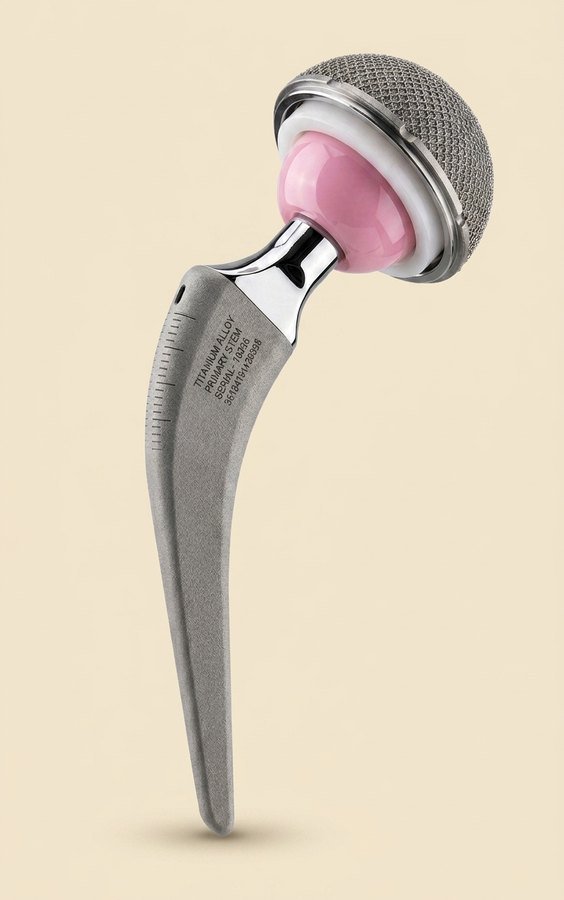
Total hip replacement is one of the most successful operations in all of modern medicine, and for most people it means one simple thing: getting your life back.
Why does my hip hurt so much?
Your hip is a ball-and-socket joint, cushioned by smooth cartilage that lets the bones glide over each other. With arthritis, injury, or simple wear over time, that cushion thins out. Bone begins to rub on bone — and that’s the deep, grinding ache you feel. Rest, medicines, and physiotherapy help many people for years. But when the pain starts deciding what you can and cannot do, it may be time to consider a lasting solution.
What actually happens in a hip replacement?
The idea is beautifully simple: the worn-out surfaces of the joint are replaced with smooth, durable new ones. The damaged ball is replaced with a polished ceramic or metal ball, and the socket receives a new, smooth lining. Nothing about your leg looks different from the outside — the change is all on the inside, where a rough, painful joint becomes a smooth, gliding one again.
The operation itself usually takes about 60–90 minutes, and modern anaesthesia is safe, precise, and tailored to you.
The part most people don’t expect: how quickly you’re up
Most patients stand and take their first steps with support within a day of surgery — often the same evening. Walking is part of the treatment. Over the following weeks you’ll progress from a walker to a stick to walking freely. Most people are back to daily routines within 6 weeks, and continuing to improve for months after.
Answers to the questions patients ask most
Will the surgery be painful?
You’ll be fully comfortable during the operation. Afterwards, modern pain-management techniques keep discomfort well controlled — most patients tell us it’s far less than they feared.
How long will my new hip last?
Modern implants routinely last 20–25 years or more. For many patients, a hip replacement is a once-in-a-lifetime procedure.
Will I be able to sit on the floor, climb stairs, or travel?
Stairs, walking, swimming, cycling, travel — yes. Deep floor-sitting is discussed individually depending on the implant and your anatomy. Bring your goals to the consultation; surgery is planned around your life.
You don’t have to decide today
A consultation is simply a conversation — an examination, an X-ray, and honest answers. Dr. Vignesh Karthik is an internationally trained hip and knee surgeon practising in the UAE, and he will tell you plainly what he would advise for his own family.
This page is for general education and is not a substitute for personal medical advice. Every patient is different — please consult a qualified orthopaedic surgeon about your specific condition.