
Partial (Unicondylar) Knee Replacement
You might not need a full knee replacement — sometimes only one worn compartment needs fixing.
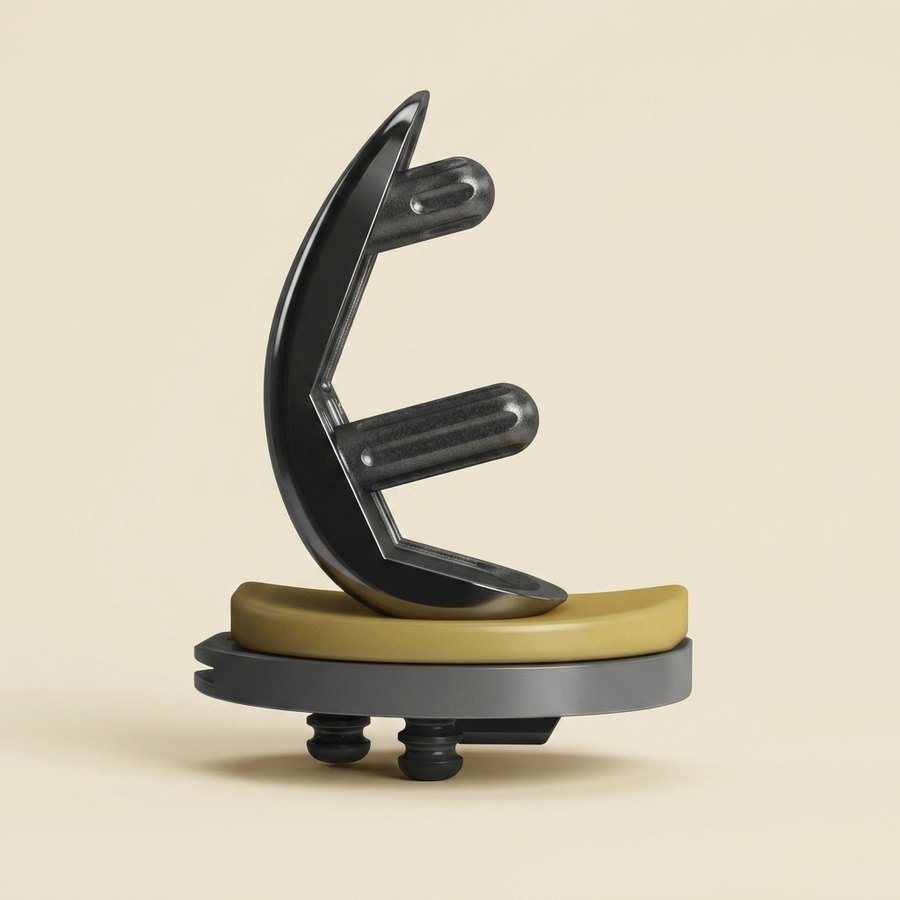
In many patients, arthritis affects only one compartment of the knee — usually the inner side — while the rest of the joint remains healthy. For the right patient, a partial (unicondylar) knee replacement resurfaces only the worn area and leaves everything healthy untouched, including all your natural ligaments.
Why keeping your ligaments matters
Your knee’s ligaments are its sensors and stabilisers — a big part of why your knee “feels like your knee.” Because partial replacement preserves them all, patients consistently describe the result as more natural than a total replacement. The knee bends well, feels stable, and moves the way you remember.
What does the procedure involve?
Through a smaller incision than a total knee replacement, the worn surfaces of one compartment are smoothed and capped with slim metal and plastic components — think of it as resurfacing one lane of the road rather than rebuilding the entire highway. Less bone is removed, less soft tissue is disturbed, and the operation is typically shorter.
The recovery advantage
With a smaller operation comes an easier recovery: less post-operative discomfort, a shorter hospital stay (often just 1–2 days), and a faster return to walking and daily life. Many patients are walking unaided and back to their routine noticeably sooner than after a total knee replacement.
Frequently asked questions
Am I a candidate?
The best candidates have arthritis confined to one compartment, intact ligaments, and reasonably preserved movement. An examination and standing X-rays — sometimes an MRI — give a clear answer. If your arthritis is more widespread, we’ll tell you honestly and discuss the right option instead.
Will I need a total replacement later?
Modern partial knees have excellent long-term results in well-selected patients. And should arthritis ever progress elsewhere years later, a partial can be converted to a total replacement — so it doesn’t burn any bridges.
Find out which option fits your knee
The difference between a partial and total knee replacement is decided by your anatomy, not preference — and the only way to know is a proper assessment.
This page is for general education and is not a substitute for personal medical advice. Every patient is different — please consult a qualified orthopaedic surgeon about your specific condition.